

Waste-to-energy Pyrolysis Treatment Systems
At C2E, we develop and build the next generation of pyrolysis plants. Our focus is not on inventing exotic reactor types, but rather on intelligent system integration and process design. We build electrically driven plants that solve the real challenges in the industry: downtime, contaminated by-products, and local environmental impacts.
Our core business is to create a profitable and environmentally sound recycling of two of society's major waste products: End-of-life tires and degassed biomass (digestate).
Our process approach: Overcoming the industry's teething problems
Many conventional pyrolysis and gasification plants operate with a single reactor at high temperatures. This approach has a significant weakness: The materials are inevitably converted into tar. This leads to clogged plants, frequent downtime, and a contamination of the by-products one is trying to extract.
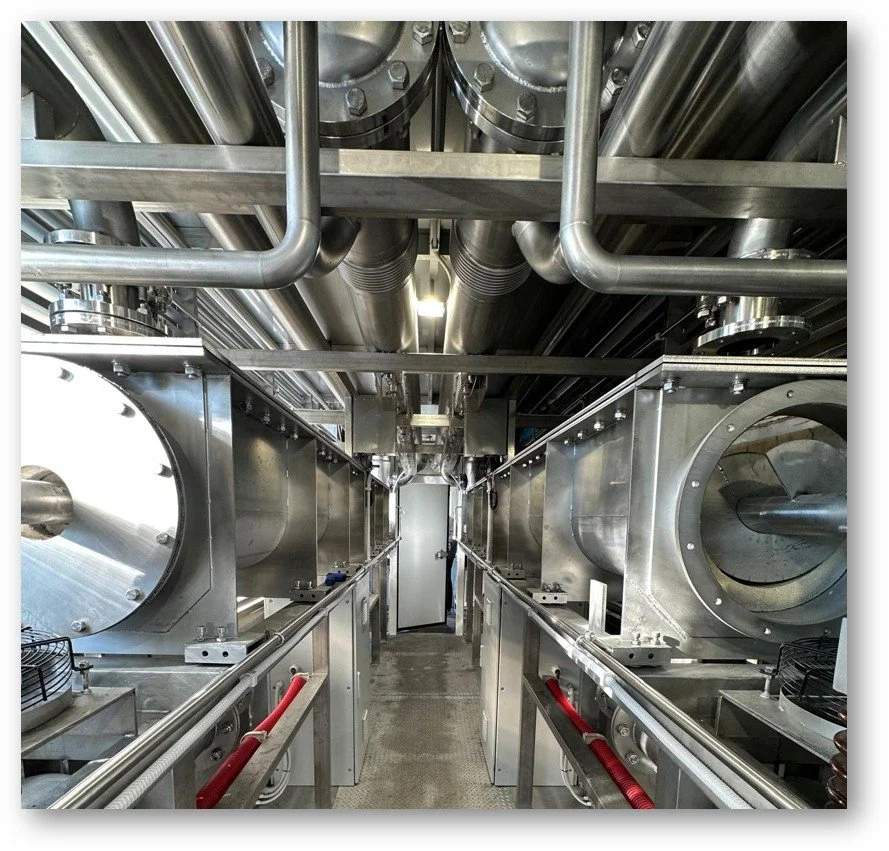
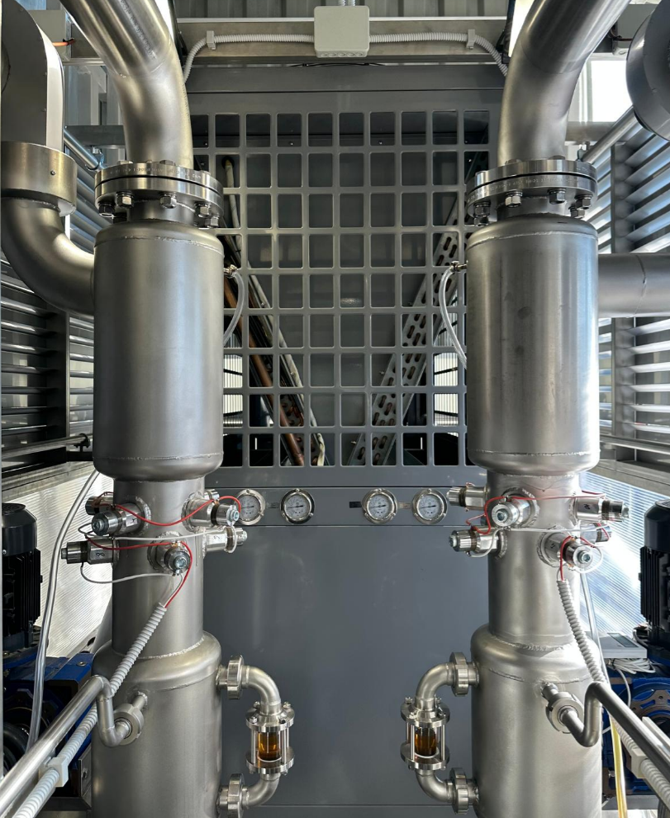
At C2E, we have designed our plants around a controlled two-stage pyrolysis process with a three-stage condensation. By separating the products early in the process, we achieve two crucial advantages:
Stable operation without tar formation:
We prevent the formation of tar from the start, which ensures a much more stable operation and significantly cleaner end products.
Extraction of high-value products:
The early separation allows us to extract and preserve fragile high-value products – such as limonene, for example – before they are destroyed by the heat in the system.
Recycling of end-of-life tires
Ordinary car tires constitute an increasing recycling problem globally. Through our electrically heated process, we extract hydrocarbons and convert the tires into recovered Carbon Black (rCB). This product can replace the need for fossil "virgin carbon black" in the industry, which ensures an important step towards a circular economy.
With our process cemented in proven technologies, we are now also focusing on handling even more difficult fractions. For example, we are actively working on research and demonstration projects aimed at recycling complex self-sealing tires, where we track and handle challenging chemistry such as silicon and sulfur in the process
Biogas digestate and bio-sludge
Alongside the tire pyrolysis, we use our technology for the treatment of bio-sludge and degassed biomass from biogas plants (digestate). These bio-residues are efficiently converted into green fuels (such as biogas and bio-oil) as well as solid carbon products (biochar).
The biochar acts as an excellent soil conditioner in agriculture, where it simultaneously serves as an effective tool for carbon storage (CCS). Through our closed system, emissions are minimized, and we can make wastewater or biogas plants more self-sufficient with energy.
Responsibility towards the local environment
The spread of pyrolysis technology in Denmark has historically met resistance, most often due to odor nuisances. For C2E, it is an absolute requirement that our plants can coexist seamlessly with the local community.
Our plants are designed as closed systems to eliminate harmful emissions. We have a strong focus on minimizing potential odor nuisances, partly by recirculating potentially odor-polluting gases internally in the system for oxidation and cleaning. At the same time, we reduce the need for external fossil fuels by utilizing the plant's own gases and basing the heating on electricity.